The first cold snap in Gastonia sends more than people indoors. Mice and rats that lived comfortably outside all summer start testing the edges of houses for warmth, shelter, and food. By the time you hear scratching in a wall or find droppings in the pantry, the animals have usually been entering for weeks through gaps you would walk past without noticing.
Rodent control is mostly a building problem with a pest attached to it. Poison and traps have a place, but neither holds if the entry points stay open, because new animals replace the ones removed. This guide works as a decision guide: match your situation to the right first move, then close the door behind it.
How small a gap is big enough
A mouse can pass through an opening about the width of a dime, roughly a quarter inch. A young rat needs only about double that. Those gaps hide in ordinary places: where gas and water lines enter, around garage door corners, at the gap under a warped crawl space door, through weep holes without covers, and along roof lines where soffit meets brick. In Piedmont homes, the pipe penetrations hidden behind shrubs are the most missed entry of all.
Rats also climb. Overhanging limbs, vines on brick, and utility lines give roof rats a path to vents and attic openings that ground-level checks never see. If droppings appear in the attic but the foundation looks tight, look up before you look down again.

Signs that sort the situation
Fresh droppings are dark and soft; old ones are gray and crumble. Rub marks, dark greasy smears along a baseboard or pipe, show a repeated travel route. Shredded insulation, stored paper, or pet food packaging in a quiet corner points to nesting. Gnaw marks on wood and plastic grow lighter in color when recent. Sounds help too: light scratching and scurrying at night is typical of mice in walls and attics, while heavier thumps suggest a larger animal.
One mouse in a trap does not mean one mouse in the house. Mice live in small groups and breed quickly indoors where food and warmth are steady. Treat a single catch as evidence of a route, then find and seal the route.
Choosing the right response
| Situation | Best first move | Why it fits | Watch out for |
|---|---|---|---|
| Droppings in one cabinet, no sounds | Snap traps along the travel route plus sealing pipe gaps | Small, localized activity is often caught early | Live traps release the problem nearby unless exclusion is done |
| Scratching in attic, droppings throughout | Full exclusion inspection, then trapping inside | Established attic activity means multiple entries | Poison indoors can leave dead animals in walls |
| Rats around trash, sheds, or a crawl space | Sanitation and harborage removal first, traps second | Outdoor food and shelter sustain the population | Bird seed and pet food outdoors keep drawing them back |
| Recurring mice every fall | Seal the building envelope before cold weather | Same gaps get reused each season | Foam alone is gnawed through; pair it with metal |
Exclusion that actually holds
Seal gaps with materials rodents cannot chew through easily: copper mesh or steel wool packed into the hole, backed by sealant, or sheet metal and hardware cloth for larger openings. Expanding foam alone is a filler, not a barrier. Fit door sweeps so no light shows at the threshold. Cap or screen vents with sturdy mesh, and repair the bottom edge of garage doors where the rubber seal has gaps at the corners.
Work from evidence. Place traps perpendicular to walls along rub-mark routes, with the trigger toward the wall. Check and reset daily at first. Once catches stop for a full week and no fresh droppings appear, the sealing is likely holding.
Why exclusion beats poison as the main plan
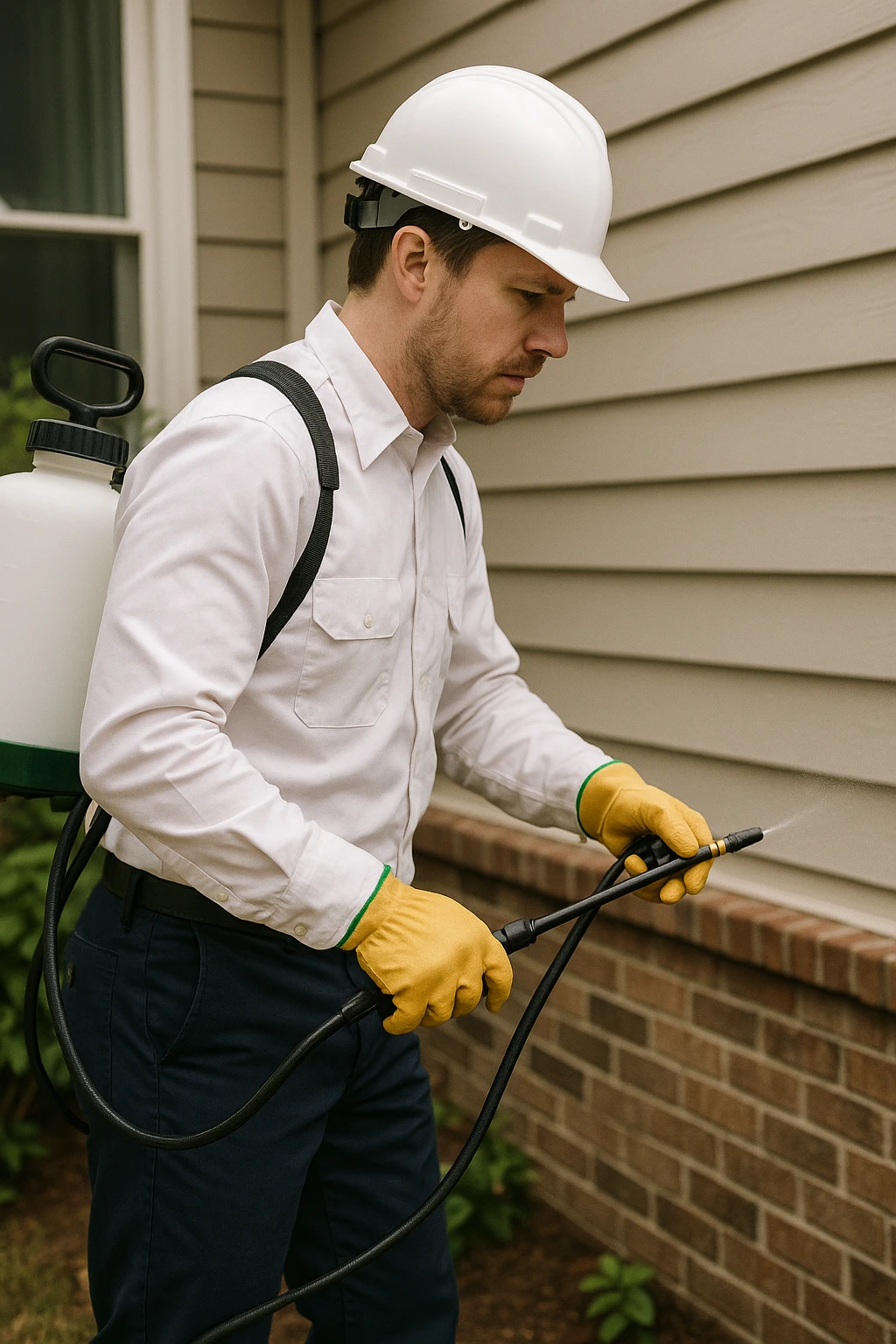
Poison does not keep new rodents out, and it creates a second problem when an animal dies in a wall void or attic corner you cannot reach. It also poses a risk to pets and to wildlife that eat poisoned rodents. Trapping plus sealing solves the cause rather than the symptom, and it gives you a count: catches falling to zero is information poison never provides. For heavy rat activity outdoors, a professional may still use secured bait stations as one layer, but sealing and sanitation remain the foundation of the work done by services such as All-Pro Pest Management.
Common questions
What time of year do rodents move into Gastonia homes?
Movement rises with the first sustained cold in fall and continues through winter, but mice will enter any month if food and a gap are available. Sealing in early fall, before the first cold snap, gives the best result.
Will sealing my house trap rodents inside?
It can if trapping is skipped. The correct order is to trap and confirm activity has stopped, or to use one-way exclusion methods under professional guidance, then complete the final seals.
Are droppings in the attic a health concern?
Yes, treat them seriously. Avoid dry sweeping, which puts particles in the air, wear a mask and gloves for any cleanup, and have heavy contamination assessed before disturbing insulation.
Photos in this guide are representative stock images.
← All guides from All-Pro Pest Management← Back to All-Pro Pest Management